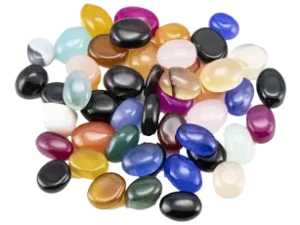
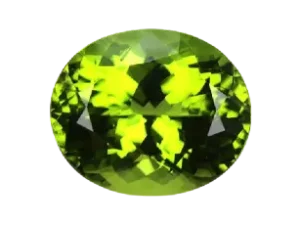
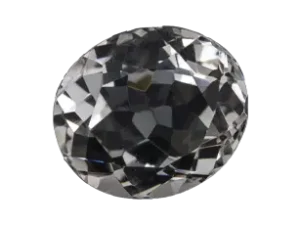
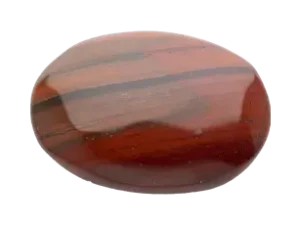
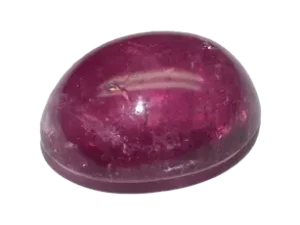
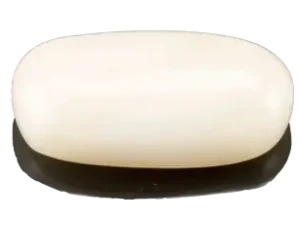
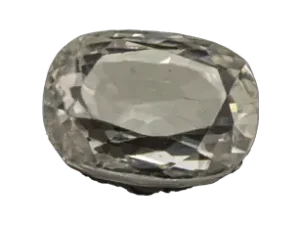
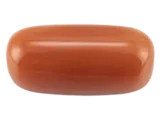
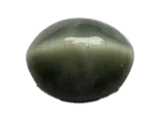
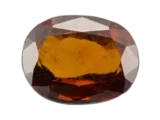
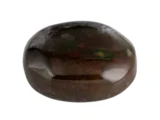
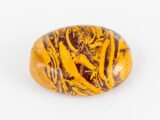
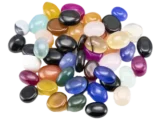
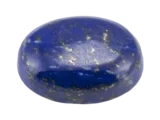
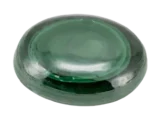
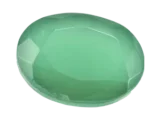
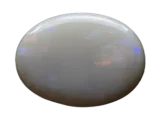
Original Onyx Stone (Onex Ratna): Black & Green Onyx Price Guide India (2026)
Looking for an authentic Onex Ratna (Onyx stone)? With its deep black elegance or vibrant green appeal, Onyx has been valued for centuries as a stone of protection and grounding. But here’s what most buyers don’t know: nearly all “Black Onyx” in the market is actually dyed chalcedony — and that’s perfectly acceptable in the gem trade. This guide explains everything about Onyx stone: the different varieties, current prices in India, how to identify real Onyx from plastic/glass imitations, and what to expect when buying. Whether you want Black Onyx for style or astrological purposes, you’ll learn to buy with confidence.

Onyx Quick Facts
| Mineral Family | Chalcedony (Microcrystalline Quartz) |
| Chemical Formula | SiO₂ (Silicon Dioxide) |
| Hardness | 6.5 – 7 (Mohs Scale) |
| Key Feature | Parallel banding (true Onyx) or uniform color |
| Common Varieties | Black Onyx, Green Onyx, Sardonyx, Banded Onyx |
| Primary Sources | Brazil, Uruguay, India, Mexico, USA |
| Price Range (India) | ₹50 – ₹500 per carat |
What is Onyx Stone (Onex Ratna)?
Onyx is a variety of chalcedony — a microcrystalline form of quartz. Gemologically, true Onyx is defined by its straight, parallel bands of alternating colors (typically black and white). However, in the modern gem trade, “Onyx” commonly refers to solid-colored stones, particularly Black Onyx and Green Onyx.
Important to Know: The solid black stone universally sold as “Black Onyx” is almost always gray chalcedony or agate that has been dyed to achieve uniform black color. This is a standard, permanent, and accepted industry practice — not a deception. Reputable sellers disclose this treatment.
Types of Onyx
Onyx Varieties Comparison
| Variety | Color/Pattern | Treatment | Uses |
|---|---|---|---|
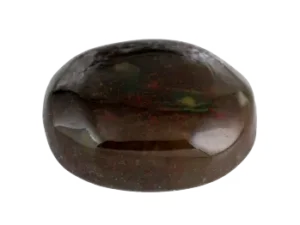
| Black Onyx | Solid, uniform black | Usually dyed (standard practice) | Jewelry, rings, pendants, men’s accessories |
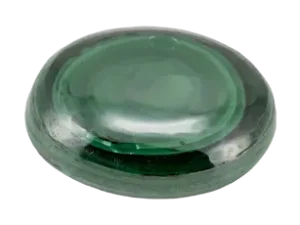
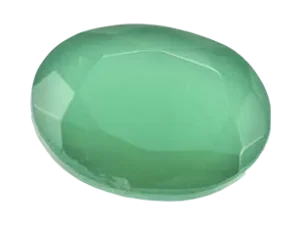
| Green Onyx | Solid green (various shades) | Usually dyed chalcedony | Jewelry, decorative items |
| Banded Onyx (True Onyx) | Parallel black & white bands | Natural, may be enhanced | Cameos, carvings, collector pieces |
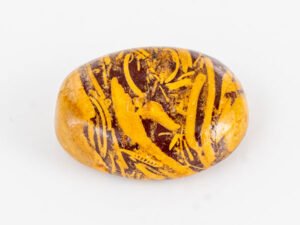
| Sardonyx | Reddish-brown & white bands | Usually natural | Cameos, intaglios, traditional jewelry |
How to Identify Original Onyx Stone
While Onyx is affordable, you still want to ensure you’re getting natural chalcedony — not plastic or glass. Here are identification methods:
Important Disclaimer: The following self-tests are for preliminary analysis only. These methods can help you spot obvious fakes but cannot guarantee authenticity. For 100% accurate identification, always get a lab certificate from a recognized gemological laboratory.
Test 1: Temperature Test
Natural chalcedony (Onyx) conducts heat better than plastic.
How to test:
- Touch the stone to your cheek or lip
- Note the initial temperature
Preliminary results:
- Natural Onyx: Feels cool initially, warms slowly
- Plastic: Feels warm immediately, same as room temperature
- Glass: Feels cool but warms faster than stone
Test 2: Weight/Heft Test
Chalcedony has specific gravity of 2.60-2.65 — heavier than plastic, similar to glass.
Preliminary results:
- Natural Onyx: Feels substantial, dense for its size
- Plastic: Feels noticeably lighter than expected
Test 3: Magnification Test
Examine the stone under 10x magnification or phone camera zoom:
- Natural Onyx: May show subtle banding, fine texture, natural characteristics
- Glass: May contain round air bubbles (manufacturing defect)
- Plastic: May show mold lines, too-perfect uniformity, or surface scratches
Test 4: Scratch Resistance
Onyx (hardness 6.5-7) is harder than steel (5.5) but softer than quartz (7).
Preliminary results:
- Natural Onyx: Cannot be scratched by steel needle; scratches glass
- Plastic: Easily scratched by steel
- Glass: Similar hardness to Onyx (5.5-6)
Test 5: Lab Certification (100% Reliable)
The only way to be completely certain is a certificate from a recognized gemological laboratory. Labs will confirm:
- Material identification (natural chalcedony vs. glass/plastic)
- Treatment disclosure (dyed, heated, etc.)
- Origin (if determinable)
Remember: Self-tests help you avoid obvious fakes (plastic, low-quality glass), but professional lab testing is the only 100% accurate method. For valuable purchases or astrological use, always insist on lab certification.
Onyx Stone Price in India (2026)
Onyx is one of the most affordable gemstones, making it accessible for everyone. Here are current Onyx stone prices:
Black Onyx Price by Quality
| Quality | Price (₹/carat) | Characteristics |
|---|---|---|
| Commercial | ₹50 – ₹100 | Uniform black, standard polish |
| Good | ₹100 – ₹200 | Deep black, good polish, no visible flaws |
| Fine | ₹200 – ₹350 | Excellent polish, mirror-like finish, large sizes |
| Premium/Carved | ₹350 – ₹500+ | Custom cuts, intricate carvings, exceptional finish |
Green Onyx Price
| Quality | Price (₹/carat) | Characteristics |
|---|---|---|
| Commercial | ₹50 – ₹100 | Light green, standard finish |
| Good | ₹100 – ₹250 | Vibrant green, good transparency |
| Fine | ₹250 – ₹400 | Deep emerald-like green, excellent polish |
Onyx Product Price Ranges
| Product | Size/Specs | Price Range (₹) |
|---|---|---|
| Loose Black Onyx Stone | 5-10 carat | ₹250 – ₹2,000 |
| Black Onyx Ring (Silver) | 5-8 carat stone | ₹1,500 – ₹5,000 |
| Black Onyx Pendant | 8-15 carat | ₹800 – ₹3,500 |
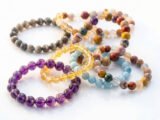
| Black Onyx Bracelet | 8mm beads | ₹300 – ₹1,200 |
| Green Onyx Stone | 5-10 carat | ₹250 – ₹2,500 |
| Sardonyx (Banded) | Per piece | ₹300 – ₹2,000 |
Prices as of January 2026. Actual prices vary based on size, cut quality, and craftsmanship.
What Affects Onyx Price?
- Color Uniformity: Deep, even color without lighter patches commands higher price
- Polish Quality: Mirror-like, flawless surface finish adds value
- Size: Larger stones and beads cost more per carat
- Craftsmanship: Custom cuts, carvings, and intricate designs increase price
- Banding (for true Onyx): Sharp, well-defined parallel bands are more valuable
Onyx in Metaphysical & Astrological Traditions
Black Onyx has been valued across cultures for its protective and grounding properties. Here’s what various traditions say:
Traditional Metaphysical Associations
In crystal healing and spiritual practices, Onyx is traditionally associated with:
- Protection: Believed to absorb and transform negative energy
- Grounding: Associated with stability, focus, and centering
- Self-Control: Traditionally used to support discipline and willpower
- Strength: Associated with emotional and physical stamina during difficult times
- Root Chakra: Connected to the Muladhara (Root) chakra in yogic traditions
Astrological Associations
According to various astrological traditions:
- Western Astrology: Associated with Leo and Capricorn
- Vedic Astrology: Sometimes recommended for Saturn (Shani) as an alternative stone
- Chinese Astrology: Associated with the Water element
Note: Astrological gemstone recommendations vary widely between practitioners. In Vedic astrology, primary Saturn stones are Blue Sapphire (Neelam) and its substitutes. Consult a qualified astrologer before wearing any gemstone for astrological purposes.
How to Evaluate Onyx Quality
Unlike diamonds with the 4Cs, Onyx is evaluated differently:
1. Color (Most Important)
- Black Onyx: Deep, saturated, uniform black without gray patches or lighter zones
- Green Onyx: Vibrant, even green; deeper shades are more valued
- Banded Onyx: Strong contrast between bands; sharp definition
2. Surface Polish
- Best: Mirror-like, highly reflective surface
- Good: Smooth with bright luster
- Poor: Dull, pitted, or scratched surface
3. Cut Quality
- Cabochons: Smooth dome, symmetrical shape, well-proportioned
- Faceted: Even facets, good symmetry, no chips
- Carvings: Clean lines, detailed work, smooth finish
4. Transparency (for some varieties)
- Black Onyx is typically opaque (preferred)
- Green Onyx may be translucent (adds value if even)
How to Care for Onyx Jewelry
Onyx is durable (hardness 6.5-7) but requires some care:
- Cleaning: Warm soapy water and soft cloth; rinse thoroughly
- Avoid: Ultrasonic cleaners (may affect dyed stones), harsh chemicals, bleach
- Storage: Store separately from harder stones like Ruby or Sapphire to prevent scratches
- Daily Wear: Suitable for rings and bracelets; remove during heavy work
Buying Checklist: Original Onyx
Before purchasing, verify:
- ✓ Stone feels cool and dense (not warm like plastic)
- ✓ No visible air bubbles under magnification
- ✓ Uniform color without patches (for solid-color Onyx)
- ✓ Good surface polish without pits or scratches
- ✓ Seller discloses treatment (dyeing is standard for Black Onyx)
- ✓ Lab certification available for valuable pieces
- ✓ Return policy offered
For comprehensive gemstone evaluation guidance, see our complete gemstone buying guide.
Why Buy Onyx from Ratna Gems?
Every Onyx from Ratna Gems comes with:
- Authenticity Guarantee: Natural chalcedony with Lifetime Authenticity Guarantee — no plastic or glass imitations.
- Treatment Transparency: Full disclosure on dyeing and treatments — honest information always.
- 7-Day Returns: Shop with confidence — full refund if not satisfied.
Frequently Asked Questions
What is Onex Ratna (Onyx stone)?
Onex Ratna is the Hindi trade name for Onyx — a variety of chalcedony (microcrystalline quartz). True Onyx has parallel bands of black and white, but “Black Onyx” and “Green Onyx” commonly refer to solid-colored dyed chalcedony. It’s valued for its elegant appearance and traditional associations with protection and grounding.
What is the price of Onyx stone in India?
Onyx stone price in India ranges from ₹50-100/carat for commercial quality to ₹200-500/carat for fine quality with excellent polish. Black Onyx rings typically cost ₹1,500-5,000, and bracelets ₹300-1,200. Onyx is one of the most affordable gemstones available.
Is Black Onyx always dyed?
Yes, the vast majority of solid Black Onyx is gray chalcedony or agate that has been dyed to achieve uniform black color. This is a permanent, stable, and widely accepted industry practice — not a deception. Natural solid black chalcedony is extremely rare. Reputable sellers disclose this treatment.
How to identify real Onyx from fake?
Preliminary tests include: temperature test (natural Onyx feels cool), weight test (heavier than plastic), and magnification check (no air bubbles or mold lines). However, these are for preliminary analysis only. For 100% accurate identification, always get lab certification from a recognized gemological laboratory.
What is the difference between Black Onyx and Green Onyx?
Both are dyed chalcedony — Black Onyx is dyed black, Green Onyx is dyed green. They have similar hardness (6.5-7) and durability. The choice is primarily aesthetic. Green Onyx may show some translucency, while Black Onyx is typically opaque.
Which planet is Onyx associated with?
Astrological associations for Onyx vary between traditions. In some Vedic astrology practices, Black Onyx is sometimes mentioned as an alternative stone for Saturn (Shani), though Blue Sapphire (Neelam) is the primary Saturn gemstone. Always consult a qualified astrologer for personalized recommendations.
Can Onyx be worn daily?
Yes, Onyx is suitable for daily wear. With hardness 6.5-7 on Mohs scale, it’s durable enough for rings and bracelets. Clean with warm soapy water, avoid harsh chemicals, and store separately from harder gemstones to prevent scratches.