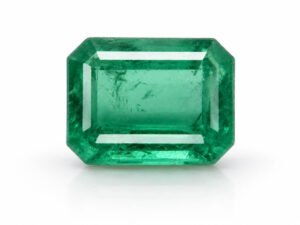
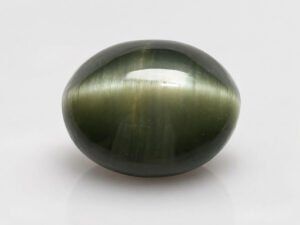
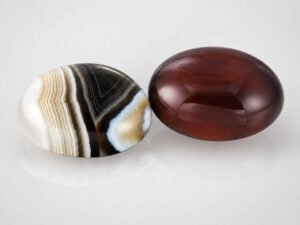
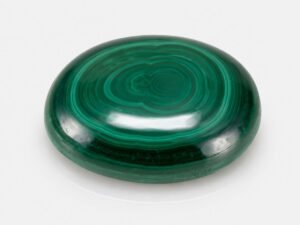
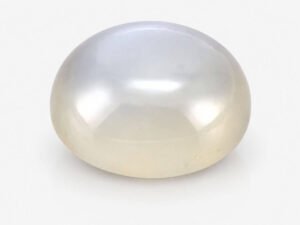
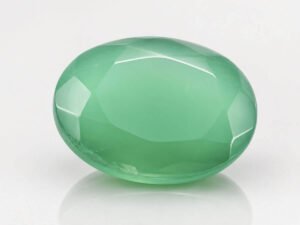
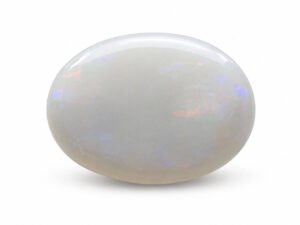
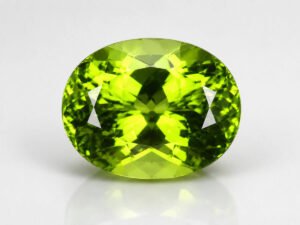
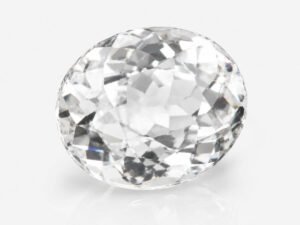
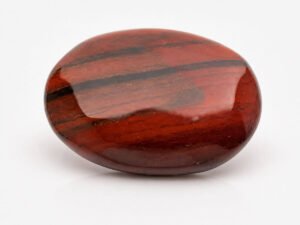
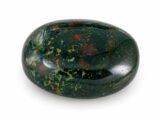
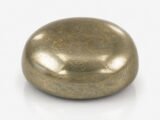
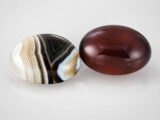
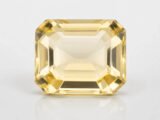
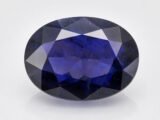
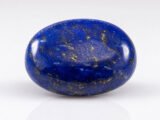
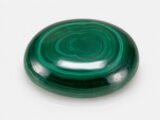
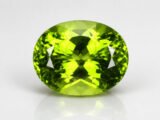
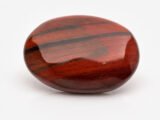
Looking for an authentic Onex Ratna (Onyx stone)? With its deep black elegance or vibrant green appeal, Onyx has been valued for centuries as a stone of protection, grounding, and astrological remedies. But here’s what most buyers don’t know: nearly all “Black Onyx” in the market is actually dyed gray chalcedony — and that is a standard, permanent industry practice. This guide explains everything about Onyx stone: the chemical dyeing processes, 2026 prices in India, how to identify real Onyx from plastic/glass imitations, and what to expect when buying. Whether you want Black Onyx for Shani/Rahu remedies or Green Onyx as a Mercury substitute, you’ll learn to buy with confidence.

Onyx Gemological Specifications
| Mineral Family | Chalcedony (Microcrystalline Quartz) |
| Chemical Formula | SiO₂ (Silicon Dioxide) |
| Hardness | 6.5 – 7 on the Mohs Scale |
| Specific Gravity | 2.55 – 2.70 g/cm³ |
| Refractive Index | 1.530 – 1.543 (Birefringence ~0.004) |
| Polariscope Character | AGG (Aggregate — remains constantly bright under crossed polarizers) |
| Primary Origins | Rio Grande do Sul (Brazil), Uruguay, India, Chihuahua (Mexico) |
What is Onyx Stone (Onex Ratna)?
Onyx is a microcrystalline (or cryptocrystalline) variety of chalcedony quartz. Gemologically, the difference between Agate and Onyx lies in their banding: Agate features concentric, curved banding, whereas Onyx features straight, parallel banding. Historically, these high-contrast parallel layers made Onyx the ultimate medium for carving cameos and signet rings, as hot sealing wax does not adhere to silicate chalcedony.
The Chemistry of Onyx Dyeing Treatments
Because solid, natural black or intense emerald-green chalcedony is extremely rare in nature, the gem trade utilizes permanent chemical enhancements, originally developed in Idar-Oberstein, Germany:
- Black Onyx (Sugar-Acid Carbonization): Gray chalcedony is soaked in a sugar or honey solution for weeks. It is then boiled in concentrated sulfuric acid. The acid acts as a dehydrating agent, carbonizing/charring the sugar to trap microscopic particles of black carbon soot within the stone’s silica pores. This treatment is permanent and stable.
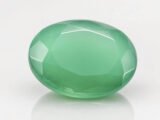
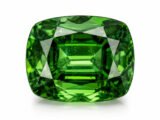
- Green Onyx (Chrome & Nickel Salts): Porous chalcedony is soaked in chromium chloride or nickel nitrate solutions to produce a deep green hue. Under a color filter, dyed green chalcedony shows a pink/red tint, distinguishing it from natural green chrysoprase.
Onyx vs. “Onyx Marble” Calcite Warning
Crucial Identification Alert: True Onyx is a hard silicate mineral (Mohs hardness 6.5–7). However, the interior design trade uses the term “Onyx Marble” (Mexican Onyx) for banded calcite or aragonite (Mohs hardness 3). True silicate onyx cannot be scratched by a steel pocketknife and is highly acid-resistant. Calcite “onyx marble” is easily scratched by steel and effervesces (fizzes) instantly under mild acids.
How to Identify Original Onyx Stone
Verify your Onyx using these laboratory and home tests:
- Polariscope AGG Test: Under crossed polarizers, because onyx is an aggregate of micro-quartz crystals, it displays continuous light transmission (remains bright throughout a 360-degree rotation). Isotropic glass or plastic remains completely dark.
- Temperature Test: True chalcedony has high thermal conductivity. It feels cold against the cheek or lips initially and warms up slowly. Plastic feels warm to the touch instantly.
- Magnification Check: Under a 10x loupe, check for natural parallel growth bands or micro-pores. Mold lines, air bubbles, and pocket scratches are signs of plastic or glass imitations.
Onyx Stone Price in India (2026)
Jaipur market rates for loose gemstones are priced per carat, while decorative onyx marble slabs are sold per square foot:
Loose Onyx Gemstone Rates (Jaipur Index)
| Variety & Quality | Price Range (₹/Carat) | Appearance |
|---|---|---|
| Commercial Cabochons | ₹6 – ₹30 | Opaque black or pale green, standard cut |
| Good Quality Jewelry Grade | ₹30 – ₹60 | Deep, even color, eye-clean dome, good polish |
| Premium Custom Cut | ₹60 – ₹150+ | Mirror-like luster, perfect symmetry, large carat sizes |
| Sardonyx / Banded Cameos | ₹200 – ₹500+ | High-contrast natural red-brown and white parallel bands |
Astrological Alignments & Wearing Rules
Onyx is widely worn in India as an Up-ratna (substitute gemstone):
1. Green Onyx for Mercury (Budh)
Green Onyx is worn as an upratna, or substitute stone, for Emerald (Panna), for Mercury (Budh) — the planet traditionally associated with intellect, speech and commerce. Because a substitute is held to work more gently than the primary stone, practitioners generally prescribe a larger weight than they would for Panna.
- How to wear: mounted in silver, on the little finger of the working hand, first worn on a Wednesday morning during Shukla Paksha, with the Mercury mantra “Om Bum Budhaya Namah” (ॐ बुं बुधाय नमः) recited 108 times.
- Weight: 1 Ratti per 10 kg of body weight, at 1 Ratti = 0.91 carat, as your astrologer specifies.
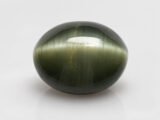
Read this before buying green onyx for a Budh remedy — it is the point most sellers skip. The great majority of green onyx on the world market is dyed chalcedony, and most of it starts as grey or white Brazilian agate that is coloured with chrome or nickel salts. Natural green chalcedony does exist, and India is one of the sources that produces it — but it looks different, and that difference is the thing to learn.
Judge it by colour behaviour, not by price. Dyed material is uniformly, vividly green, because a dye bath colours everything evenly and the whole point of the process is to produce a consistent stone. Naturally coloured green chalcedony is more variable: the green shifts in depth across the stone, it is often softer or more olive in tone, and it does not look manufactured. So the instinct most buyers bring to this — that a deeper, more even green must be the better stone — is exactly backwards here. Variation is the mark of natural colour; perfect uniformity is the mark of the dye bath.
What the colour filter actually tells you. A Chelsea colour filter is the standard first check: chrome-coloured green stones appear pink or red through it, while nickel-coloured ones stay green. Be careful how you read that, though, because it detects the element rather than the method — most green dye is chromium based, so red through the filter points to dye, but naturally chrome-bearing chalcedony would also read red. The filter narrows the question in seconds and costs very little; it does not close it. What closes it is a loupe and a laboratory: under 10x magnification, dye concentrates in fractures, along banding and in the porous zones, and it often looks paler inside a drill hole or chip, whereas natural colour sits evenly through the body of the stone and ignores the cracks entirely. Because Indian practitioners generally hold that a dyed stone is not suitable for remedial wear, this is the question that decides the purchase if you are buying for Mercury rather than for appearance. Ask the seller in writing whether the colour is dyed, and whether the stone has been checked under a filter. A seller who cannot answer either question is not the seller for a remedial stone.
2. Black Onyx / Sulemani Akik for Saturn (Shani) & Rahu
In Sufi and Islamic traditions, Black Agate/Banded Onyx is known as Sulemani Akik (reverencing Prophet Solomon). It is worn to ward off the evil eye (nazar) and protect against jealousy. In Vedic astrology, it is worn as an alternative to balance Saturn (Shani) and Rahu: How to Wear: Mount it in silver and wear it on the middle finger (Shani finger) on a Saturday evening, chanting: “Om Sham Shanicharaya Namah” (ॐ शं शनैश्चराय नमः).
Historical Legends of Sardonyx
Sardonyx (red-brown sard and white onyx bands) has a famous military history. Roman soldiers wore sardonyx signet rings and amulets engraved with the god Mars or Hercules to battle, believing it would grant courage, physical strength, and absolute victory. Roman chancellors used it as signet seals because hot wax does not stick to it. It was also the preferred medium for grand imperial State Cameos (like the Gemma Augustea), portraying Roman emperors as divine conquerors.
How to Care for Onyx Jewelry
- Chemical Exposure: Since Black and Green Onyx are dyed, avoid exposing them to harsh household chemicals like bleach or ammonia, which can strip or alter the dye.
- Ultrasonic Cleaning: Never use ultrasonic or steam cleaners on dyed chalcedony. Clean with warm, soapy water and a soft-bristled brush.
- Storage: Store your Onyx rings separately from harder gemstones (like Sapphires or Rubies) to protect them from surface scratches.
Why Buy Onyx from Ratna Gems?
Every Onyx from Ratna Gems comes with:
- Authenticity Guarantee: Natural chalcedony with Lifetime Authenticity Guarantee — no plastic or glass imitations.
- Treatment Transparency: Full disclosure on dyeing and treatments — honest information always.
- 7-Day Returns: Shop with confidence — full refund if not satisfied.
Frequently Asked Questions
What is Onex Ratna (Onyx stone)?
Onex Ratna is the Hindi trade name for Onyx — a variety of chalcedony (microcrystalline quartz). True Onyx has parallel bands of black and white, but “Black Onyx” and “Green Onyx” commonly refer to solid-colored dyed chalcedony. It’s valued for its elegant appearance and traditional associations with protection and grounding.
What is the price of Onyx stone in India?
Onyx stone price in India ranges from ₹6-30/carat for commercial quality to ₹60-150+/carat for fine quality with excellent polish. Black Onyx rings typically cost ₹1,500-5,000, and bracelets ₹300-1,200. Onyx is priced for what it is — a natural chalcedony, available in good, even colour.
Is Black Onyx always dyed?
Yes, the vast majority of solid Black Onyx is gray chalcedony or agate that has been dyed using a sugar-acid carbonization process. This is a permanent, stable, and widely accepted industry practice. Natural solid black chalcedony is extremely rare.
How to identify real Onyx from fake?
Under a polariscope, real Onyx remains constantly bright during rotation (AGG reaction). Amorphous glass or plastic remains dark. Additionally, real Onyx scratches glass and feels cold to the touch.
What is the difference between Black Onyx and Green Onyx?
Both are dyed chalcedony — Black Onyx is dyed black, Green Onyx is dyed green. They have similar hardness (6.5-7) and durability. Green Onyx acts as a Mercury substitute, while Black Onyx is associated with Saturn/Rahu remedies.
Which planet is Onyx associated with?
Green Onyx is associated with Mercury (Budh) as a substitute for Emerald. Black Onyx (Sulemani Akik) corresponds to Saturn (Shani) or Rahu. Always wear in silver on the little finger (Mercury) or middle finger (Saturn).