
Emerald (Panna) Buying Guide: Price per Carat, Oiling Explained, Zambian vs Colombian
Buying an Emerald — the Panna stone of Vedic astrology — means buying into a legacy of royalty and wisdom. Revered for its lush green hue and potent astrological energies, a genuine Panna is a treasure. However, Emerald is a complex gemstone, and navigating the market requires knowledge. This expert guide provides a clear path to your purchase, detailing everything from the nuances of color and clarity to the authentic Panna stone price in India, ensuring you buy with total confidence.
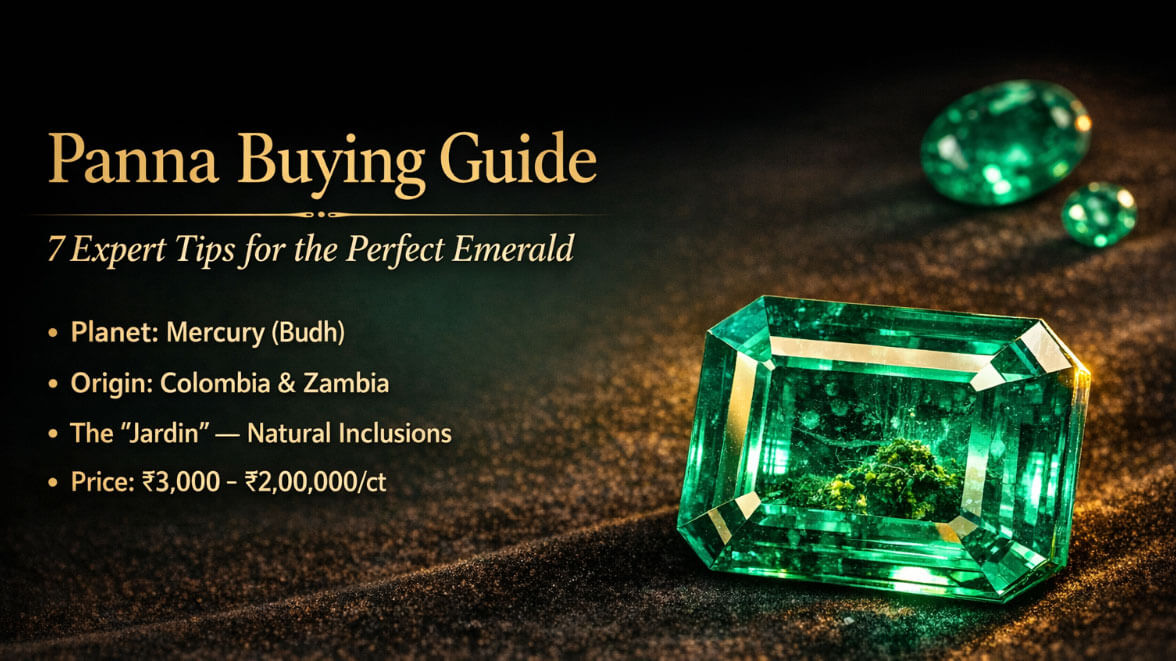
Panna Stone Gemological Specifications
| Gemstone Family | Beryl (beryllium aluminium silicate, Be₃Al₂Si₆O₁₈, space group P6/mcc) |
| Indian / Sanskrit Name | Panna (पन्ना), Budh-Ratna, Harit-Mani |
| Ruling Planet | Mercury (Budh) |
| Hardness | 7.5 – 8 on the Mohs Scale (Brittle due to natural fissures) |
| Specific Gravity | 2.67 – 2.78 |
| Refractive Index | 1.576 – 1.582 (Birefringence 0.006, Hexagonal crystal system) |
| Primary Origins | Colombia, Zambia, Brazil, Russia |
Step 1: Prioritize Color – Octahedral site trace chromophores
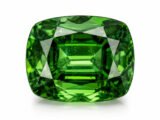
Color is the most decisive factor in an Emerald’s value. The green color is caused by trace amounts of chromium (Cr³⁺) and/or vanadium (V³⁺) replacing aluminum (Al³⁺) in the octahedral sites of the beryl crystal lattice.
Additionally, trace iron (Fe) impurities commonly introduce bluish or yellowish undertones, which are typical of schist-hosted Zambian and Brazilian deposits. For a premium Panna, look for a vibrant, pure green or slightly bluish-green. Avoid stones that look too yellow or have a pale, lifeless green tone.
- Hue: A pure green to a slightly bluish-green is the ideal.
- Tone: A medium to medium-dark tone is preferred. Emeralds that are too light are not considered fine quality, while those that are too dark can lack vibrancy.
- Saturation: Look for strong to vivid saturation, which gives the Panna its rich, luxurious appearance.
Step 2: Understand Clarity – Jardin, Origins & Synthetic Inclusions
Unlike other gemstones, Emeralds are expected to have inclusions. These natural, internal features are so common that they are referred to as the stone’s “jardin” (French for garden). Inclusions vary significantly by country of origin, acting as a geological fingerprint:
- Colombian Emeralds (Muzo & Chivor): Formed in sedimentary-hydrothermal environments, typically containing diagnostic three-phase inclusions (a cubic halite (NaCl) salt crystal, liquid brine, and a carbon dioxide (CO₂) gas bubble trapped in a jagged cavity).
- Zambian Emeralds (Kafubu): Formed in schist-hosted deposits, typically containing brown flakes of biotite or phlogopite mica and black, metallic grains of magnetite or hematite.
Natural vs. Synthetic Indicators: Emerald is the one gem where inclusions are reassuring. Natural emerald nearly always carries a jardin, so a stone showing no inclusions at all under magnification is the one to question — and lab-grown emerald is chemically the same beryl, so the answer lies in the growth markers rather than in the chemistry:
- Flux-grown synthetics (Chatham, Gilson): Exhibit veil-like flux fingerprints, platinum crucible platelets, and phenakite crystals. They contain no water in their structure.
- Hydrothermal synthetics (Biron, Tairus): Characterized by diagnostic nail-head spicules and sharp geometric V-shaped chevron or “hound’s-tooth” growth patterns under magnification.
Step 3: Evaluate the Cut – Maximizing Beauty and Stability
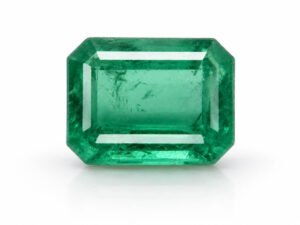
The cut of an Emerald is crucial not only for its beauty but also for its durability. The traditional “emerald cut,” a rectangular step-cut with truncated corners, was specifically designed to enhance the gem’s color while protecting its corners from chipping. A well-executed cut will maximize the Panna’s color and luster while minimizing the visibility of inclusions.
Step 4: Astrological Significance and Wearing Rules
In Vedic astrology, Emerald (Panna) is the primary gemstone for Mercury (Budh), the planet representing intellect, speech, logical reasoning, and business success. It is worn to boost memory, communication, and financial growth.
On combining stones: classical Jyotish places Mercury in natural enmity with the Moon. On that basis practitioners advise against setting Emerald alongside Pearl (Moti) or Moonstone in one ornament, or wearing them together. If you already own those stones, raise it with your astrologer before commissioning a combined setting.
Panna Astrological Wearing Rules
| Who Should Wear It? | Recommended for individuals with a weak or favorable Mercury. Especially beneficial for Gemini (Mithun) and Virgo (Kanya) ascendants. |
| Recommended Weight | 1 Ratti per 10 kg of body weight (approx. 5 to 9 Ratti / 4.5 to 8 Carats) |
| Which Finger? | The little finger (Kanistha) of the dominant hand. |
| Auspicious Metal? | Gold or Panchdhatu are highly recommended. Silver is generally avoided as it doesn’t align with Mercury’s active green ray. |
| When to Wear? | Wednesday morning during Shukla Paksha (waxing moon) at sunrise. |
| Activation Mantra | Chant the Budh Beej Mantra: “Om Braam Breem Broum Sah Budhaya Namah” (ॐ ब्रां ब्रीं ब्रौं सः बुधाय नमः) or the simpler mantra “Om Bum Budhaya Namah” 108 times. |
Determining the Correct Carat and Ratti Weight: For Budh remedies, the traditional guideline followed in India is wearing 1 Ratti of stone weight for every 10 kg of body weight (e.g., a person weighing 70 kg should wear a 7 Ratti stone). Since 1 Ratti is equivalent to 0.91 Carats, you can calculate the corresponding weight in Carats (1 Carat ≈ 1.09 Ratti).
Step 5: Understand Carat Weight and Panna Price
Large, high-quality Emeralds are much rarer than large sapphires or rubies, and their price reflects this. The panna stone price increases dramatically with size. As a rule a smaller Panna of fine colour and clarity is the more satisfying stone to own than a larger stone of lesser colour. When assessing the emerald stone price in India, always prioritize color quality over sheer size.
Step 6: Verify Treatments (Polymers/Opticon vs. Oiling) & Care Warnings
This is the fact that decides most emerald purchases, so it is worth stating without hedging: well over 90% of the emeralds on the world market have been clarity-enhanced, and they have been for centuries. Emerald grows with surface-reaching fissures as a matter of course — that is the nature of the crystal, not a defect in a particular stone — and filling those fissures with a substance of similar refractive index makes them recede from view. An oiled emerald is still a natural emerald. Nothing has been added to the colour, and no part of the stone has been replaced. What matters is which filler was used and how much, and that it is written down:
- Cedarwood oil: the traditional method, and the one the trade prefers. Its refractive index closely matches emerald, so fissures become nearly invisible. It is reversible, which is precisely why high-value markets favour it, and it is the standard against which everything else is judged. Oil can dry out over years and be replaced by a jeweller — a maintenance item, not a fault.
- Synthetic epoxy resins (Opticon and similar): these harden into polymer chains inside the fissures and hold longer than liquid oil. They are difficult to reverse, and resin-filled stones trade at roughly a 10% to 30% discount to oiled equivalents. Legitimate when disclosed; a problem only when it is not.
- What to ask for. A proper report grades the degree of enhancement as none, minor, moderate or significant. That single word moves the price more than almost anything else on the certificate, so it is the one to look for. A report that identifies the stone as natural emerald but says nothing about enhancement has answered only half the question.
Never use an ultrasonic or steam cleaner on an emerald. This is the single most important thing to know about owning one. Because emerald carries surface-reaching fissures and those fissures hold oil or resin, ultrasonic vibration drives the filler straight back out — the stone comes out looking worse than it went in, with every fracture suddenly visible — and it can widen the fissures themselves. Steam does the same through heat. Wash with lukewarm water, mild soap and a soft brush, dry with a soft cloth, and tell any jeweller working on the setting that the stone is an emerald before a torch comes near it. If the oil has dried over the years, a jeweller can re-oil the stone break, while steam heat will strip or leach out the oils and resins, turning the stone cloudy and ruined. Clean only by hand with lukewarm water, mild pH-neutral soap, and a soft toothbrush, drying immediately.
Step 7: Consider the Gemstone’s Origin & Price in India (2026)
Origin shapes both the price and the character of an emerald, and the Indian market spans from around ₹1,000 to well past ₹3,00,000 per carat. There is no ceiling at the top: exceptional Colombian material with minimal oil trades at auction, and the finest stones are bought to order rather than picked from a shelf. Read the bands below as bands, and let your budget choose the stone rather than the other way round.
Emerald (Panna) Price Chart (Per Carat in India)
| Origin / Type | Everyday Grade | Fine Grade | Premium (no or minor oil) |
|---|---|---|---|
| Colombian | ₹5,000 – ₹15,000 | ₹15,000 – ₹50,000 | ₹50,000 – ₹3,00,000+ |
| Zambian | ₹2,000 – ₹5,000 | ₹5,000 – ₹15,000 | ₹15,000 – ₹40,000+ |
| Brazilian | ₹1,000 – ₹3,000 | ₹3,000 – ₹8,000 | ₹8,000 – ₹20,000+ |
- Colombian Emeralds: historically the most famous, known for a warm, intense, pure green and for the three-phase inclusions that identify the origin. Colombian material carries the largest premium in the market — though origin alone is not a grade, and an ordinary Colombian stone can sell for less per carat than a fine Zambian one.
- Zambian Emeralds: a cooler, slightly bluish green with, on average, better clarity and fewer surface-reaching fractures than Colombian material. That last point matters more than most buyers realise: fewer fractures means less oil is needed, and a stone that needs less enhancement is both more stable in wear and easier to describe honestly. For a Panna that will be worn daily in a ring, Zambian is frequently the better practical choice, not the compromise.
- Brazilian Emeralds: generally a lighter or softer green, often sold in India under the trade name Sapota for the duller, more olive-toned material. This is where most people buy their first Panna at the Ratti weight a chart calls for, and a well-cut Sapota stone with an honest grade name on the listing is a sound purchase.
Step 8: Choose a Trusted and Knowledgeable Seller
Given the complexities of Emeralds, purchasing from a reputable seller is paramount. A trustworthy jeweler will provide transparent information, guide you through the nuances of the stone, and offer proper documentation.
- Expertise is Key: Choose a seller who specializes in colored gemstones and can explain the specifics of each Panna.
- Certification is Mandatory: They must provide an independent lab certificate for every Emerald.
- Full Transparency: They should be upfront about all treatments and provide a clear return policy.
Why Trust Ratna Gems™ for Your Emerald?
At Ratna Gems™, we combine expertise with transparency to offer a secure and educational gemstone buying experience. We are your trusted partner because we provide:
- Certified Original Gemstones: Every Panna is certified by a government-recognized lab, detailing its origin and treatments.
- Transparent and Honest Pricing: We offer competitive prices for natural Emerald gemstones with full disclosure on quality.
- Unmatched Customer Support: Our experts are here to guide you, and our 7-day return policy ensures your complete satisfaction.
Frequently Asked Questions
What are the astrological benefits of a Panna stone?
In Vedic astrology, Panna represents the planet Mercury (Budh). It is believed to enhance intelligence, improve communication skills, and bring success in creative and intellectual pursuits. It is also associated with financial growth.
How can I tell if a Panna stone is real?
A lab certificate is the only certain way. However, a key indicator of a natural Emerald is the presence of its jardin (inclusions). A stone that is perfectly clean is often a synthetic imitation. Real Emeralds also display a rich green color that is hard to replicate in fakes.
Is Emerald a durable stone for daily wear?
Emerald has a hardness of 7.5 to 8, which is good, but it is not as tough as sapphire. Due to its natural inclusions, it can be more prone to chipping. It is best suited for jewelry like pendants or for rings that are worn with care.
What is the price of an original Panna stone in India?
The price of a Panna stone in India varies significantly, from ₹800 to over ₹3,00,000 per carat. The final price is determined by the vibrancy of its color, its clarity (the nature of the jardin), cut, carat weight, and origin (Colombian stones command the highest prices).
Which finger and metal should I wear a Panna ring on?
Astrologically, Panna is set in a gold or Panchdhatu ring and worn on the little finger of your dominant hand on a Wednesday morning during Shukla Paksha. Silver is generally avoided as it doesn’t align with Mercury’s active green ray.





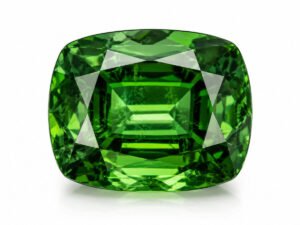

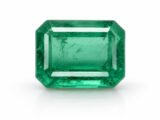
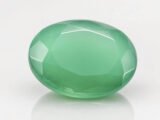
After reading your blog I realize that The Zambian emeralds are known for their deep green hue and excellent transparency, making them a sought-after choice for jewelry and investment. The Zambian emerald price per carat in India varies based on quality, color, and clarity.
A valuable guide for buying Emerald (Panna) stones! Expert tips on color, clarity, cut, and authenticity help ensure a smart purchase. Check out insights on emerald price online purchases for the best deals. Thanks Ratna Gems.