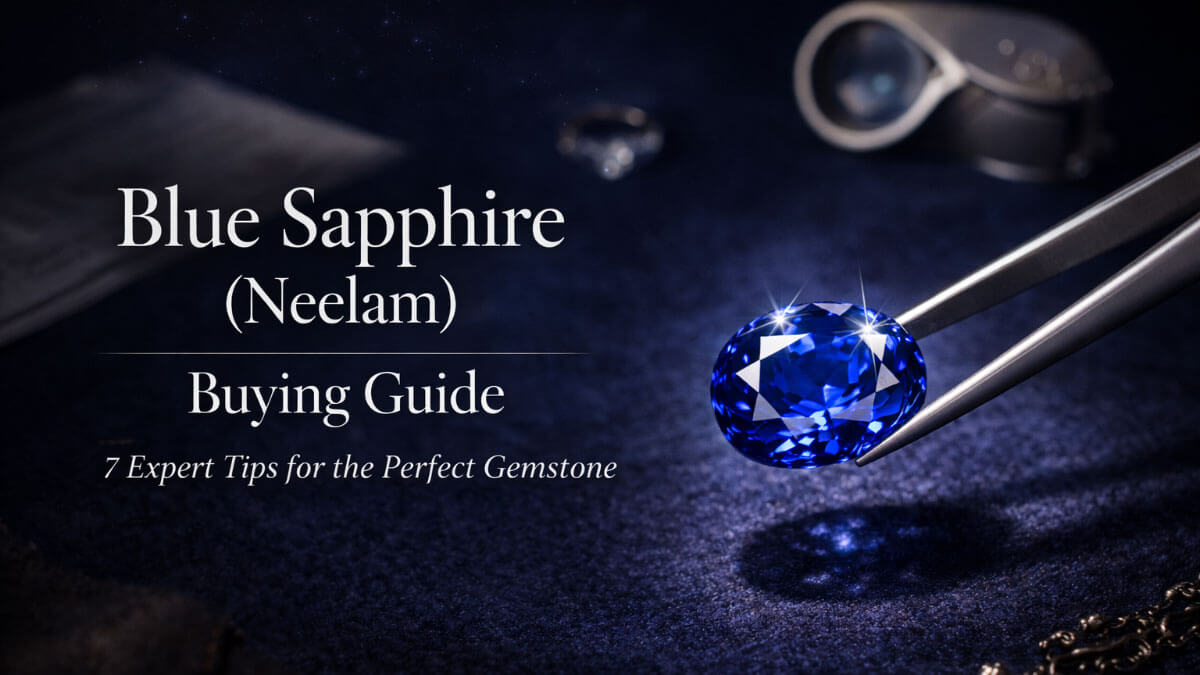
Blue Sapphire (Neelam) Buying Guide: Price per Carat, Treatments and the Shani Trial
Blue Sapphire, the Neelam of Vedic astrology, is the most misunderstood stone in the Indian market — not because it is hard to identify, but because the single word covers several quite different products at prices running from a few hundred rupees a carat to several lakh. A heated Bangkok stone, a natural Ceylon stone and a lead-glass composite are all sold as “blue sapphire”, and what separates them is treatment far more than geology. This guide works through colour, clarity, cut, weight, the Shani trial period, certification, origin and how to judge a seller — so that when you put two stones side by side, you are comparing the same thing.
Neelam Stone Gemological Specifications
| Gemstone Family | Corundum (aluminium oxide, Al₂O₃, space group R3̄c) |
| Indian / Sanskrit Name | Neelam (नीलम), Indraneel, Shanipriya |
| Ruling Planet | Saturn (Lord Shani) |
| Hardness | 9 on the Mohs Scale (Second only to Diamond) |
| Specific Gravity | 3.95 – 4.05 |
| Refractive Index | 1.762 – 1.770 (Birefringence 0.008) |
| Primary Origins | Sri Lanka (Ceylon), Kashmir (Extremely Rare), Madagascar, Burma (Myanmar) |
Step 1: Prioritize Color and Intervalence Charge Transfer Chemistry
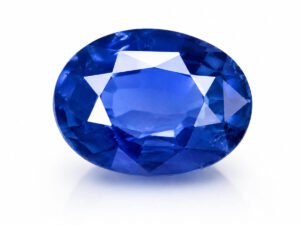
The value of a Blue Sapphire is overwhelmingly determined by its color. Scientifically, the blue of corundum is caused by intervalence charge transfer between trace transition-metal ions in the crystal lattice: Fe²⁺ + Ti⁴⁺ → Fe³⁺ + Ti³⁺. When light is absorbed during this electron transfer, a rich, velvety royal blue is produced. When you assess the color, consider three key components:
- Hue: The stone’s core color. The most desirable is a pure, vivid blue.
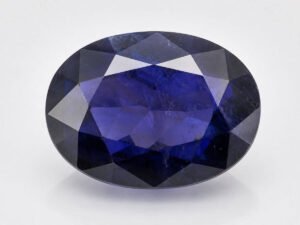
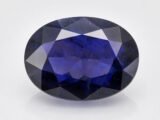
- Tone: The lightness or darkness. A medium to medium-dark tone is ideal. High iron concentrations introduce Fe²⁺–Fe³⁺ absorption bands that push the stone toward a darker, inkier navy. This is a matter of taste as much as grade: the deep sober blue has its own admirers, and it is what gives the more accessible end of the market its character.
- Saturation: The intensity of the color. Look for strong to vivid saturation, giving the stone its life.
Step 2: Assess Clarity – Identifying Natural vs. Synthetic Inclusions
Clarity refers to the absence of internal flaws. While a completely flawless natural sapphire is virtually nonexistent, gemologists look for natural inclusion “fingerprints” to verify authenticity and determine treatment status:
- Natural microscopic inclusions: natural Neelam typically shows straight, angular hexagonal growth zoning, two-phase fluid inclusions, fingerprint-like healed fissures, and zircon crystals ringed by discoid stress halos. Intact, undisturbed halos are strong evidence that a stone has not been heated, though only a laboratory can settle it.
- Synthetic indicators: the flag is not that a stone is eye-clean — fine natural sapphire often is, and it is the more expensive material. The flag is a stone with no natural inclusions at all under magnification, combined with any of these growth markers:
- Verneuil (flame-fusion): curved growth striae and spherical gas bubbles.
- Flux-grown: wispy, breadcrumb-like flux residue trails and reflective metallic platinum or gold platelets picked up from the growth crucible.
- Hydrothermal: chevron, or V-shaped, growth patterns and visible seed-crystal lines.
Expert Insight: The presence of extremely fine, intersecting rutile needle inclusions (known as ‘silk’) is a hallmark of a natural, unheated sapphire. In Kashmir stones, this silk is so fine that it scatters light, creating their legendary velvety cornflower glow. High-temperature heat treatments dissolve this silk, leaving behind tiny droplets called “ruined silk.”
Step 3: Evaluate the Cut – The Key to Sparkle
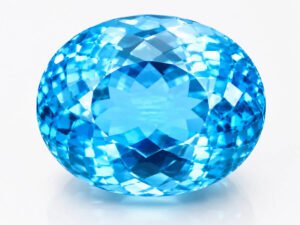
A gemstone’s cut is a testament to the artisan’s skill. It is the single most important factor in determining a stone’s brilliance and fire. A masterful cut with precise symmetry and faceting will unlock the gem’s inner light, while a poor cut—often done to retain weight—can make even a fine stone look dull. Oval, cushion, and round brilliant cuts are popular choices that complement the sapphire’s natural properties.
Step 4: Understand Carat Weight and Price Dynamics
Carat is a unit of weight, not size, and two stones of identical weight can differ several times over in price. As a rule a smaller Neelam with better colour and clarity is the more satisfying stone to own than a larger one of mediocre quality — and if the purchase is for a Shani remedy, remember that the tradition sets a minimum weight in Ratti, so weight and quality have to be balanced rather than traded off. The neelam stone price per ratti or carat also rises steeply rather than proportionally as size increases, because large clean stones are disproportionately rare. When comparing any two blue sapphire stone prices, check that both are quoted per carat and that both state their treatment.
Blue Sapphire (Neelam) Price Chart (Per Carat in India)
| Origin / Type | Everyday Grade | Fine Grade | Premium / Unheated Grade |
|---|---|---|---|
| Bangkok / Thai (heated and glass-filled) | ₹700 – ₹1,500 | ₹1,500 – ₹4,000 | ₹4,000 – ₹8,000+ |
| Ceylon (Sri Lanka) | ₹4,000 – ₹8,000 | ₹8,000 – ₹25,000 | ₹25,000 – ₹1,50,000+ |
| Kashmir (Natural) | ₹1,00,000+ | ₹2,50,000+ | ₹5,00,000 – ₹15,00,000+ |
| Madagascar | ₹5,000 – ₹10,000 | ₹10,000 – ₹25,000 | ₹25,000 – ₹50,000+ |
Indicative Indian retail rates for 2026. Kashmir is included as the market’s benchmark rather than as a stone in general circulation — the Old Mine closed in 1887 and material trades at auction. Treat every figure as a band, not a quote: within any one origin, colour and clarity move the per-carat rate several times over.
There is no upper limit to the best in Neelam. Stones above ₹1,50,000 a carat exist and trade internationally, and the finest reach auction prices with no ceiling at all. So no gemstone retailer anywhere holds the top grade of every category in stock at all times — the finest stones are bought to order, and at the upper end of these bands you should expect to commission rather than pick from a shelf. The more useful point is the other one: let your budget choose the stone rather than the other way round. A well-cut, honestly described Neelam bought comfortably within your means will serve you far better than a finer one bought under strain, and the tradition asks for the prescribed Ratti weight in natural corundum — not for the most expensive stone on the counter.
Step 5: Mandate the Saturn Astrological Trial Period and Understand Planetary Enmities
Of all the Navratna stones, Blue Sapphire carries the strongest reputation in Jyotish. It is described as the fastest-acting, and that reputation is precisely why a customary trial period attaches to this stone and to no other. It is worth knowing whichever way you view the astrology, because a serious seller will expect you to ask about it. Two things should be said plainly first: this is a tradition, not a test with any evidential basis, and if you are experiencing persistent headaches, insomnia or anxiety, those are matters for a doctor. They are not signals from a gemstone, and no stone should be allowed to delay proper medical advice.
- How it is done: the loose, unmounted stone is wrapped in a blue or black cloth and either tied to the right upper arm or kept under the pillow, customarily for three to five nights, before any decision is taken to set it into a ring.
- What is read as a good sign: settled sleep, a calm and clear frame of mind, and matters running smoothly across those days. Practitioners take this as the stone suiting the chart.
- What is read as a sign to pause: a persistent sense of unease or unsettled sleep across those nights. The customary response is simply to set the stone aside and return to your astrologer rather than go ahead with the setting. This is also exactly why the trial is done on a loose stone: nothing has been spent on a setting yet, and a seller offering a return window costs you nothing to test.
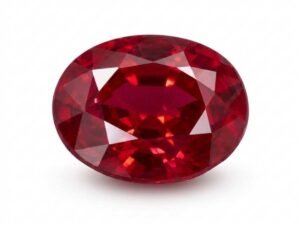
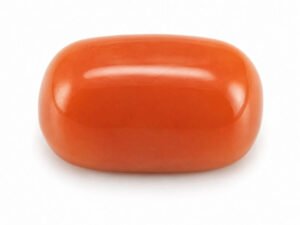
On combining stones: classical Jyotish places Saturn in natural enmity with the Sun and with Mars. On that basis practitioners advise against setting Blue Sapphire alongside Ruby (Manik), ruled by the Sun, or Red Coral (Moonga), ruled by Mars, in the same piece, and against wearing them together. If you already own those stones, raise it with your astrologer before commissioning a combined setting.
Neelam Astrological Wearing Rules
| Ruling Planet | Saturn (Lord Shani) |
| Auspicious Metal | Sterling Silver, White Gold, or Loha (Iron) – avoid Yellow Gold unless specifically advised |
| Wearing Finger | Middle finger of dominant hand (Shani finger / Madhyama) |
| Day & Time | Saturday evening (Sunset / Shani Hora) |
| Activation Mantra | Chant the Shani Beej Mantra: “Om Praam Preem Praum Sah Shanaishcharaya Namah” (ॐ प्रां प्रीं प्रौं सः शनैश्चराय नमः) or the Shani Gayatri Mantra 108 times. |
| Sizing Rule | 1 Ratti per 10 kg of body weight (e.g., 6 Ratti for a 60 kg person) |
| Cleansing Process | Immerse in Gangajal, honey, and raw cow’s milk for 10-15 minutes before sunset |
Determining the Correct Carat and Ratti Weight: For Shani remedies, the standard Indian guideline is wearing 1 Ratti of stone weight for every 10 kg of body weight (e.g., a person weighing 60 kg is advised to wear a 6 Ratti stone). Since 1 Ratti equals 0.91 carat, a 6 Ratti stone is about 5.5 carats (1 carat ≈ 1.09 Ratti). Tradition prefers unheated stone for remedial wear where the budget allows. Where it does not, a disclosed heated or treated stone is what most people actually wear, and has been for generations — the majority of practising astrologers accept Bangkok material for clients whose charts call for a Ratti weight that Ceylon material would rarely be cut to. What tradition asks is that the stone be natural corundum of the prescribed weight, honestly described; not that it be the most expensive stone on the shelf.
Step 6: Demand a Certificate – Treatment Detection & Care Guidelines
Never purchase a significant gemstone without an accompanying certificate from a credible, independent gemological laboratory (like GIA, IGI, GII). This report is your guarantee of the stone’s identity and quality. It provides an unbiased assessment of its characteristics:
- Identification: Confirms it is a Natural Corundum (Sapphire).
- Measurements & Weight: Provides exact dimensions and carat weight.
- Origin: Specifies the geographic origin (e.g., Ceylon), which impacts value.
- Treatments: Discloses any enhancements:
- Standard heat treatment: long accepted in the trade, and applied to the large majority of sapphire on the market. It dissolves rutile silk and improves colour and clarity permanently. A heated stone is still natural sapphire.
- Beryllium (Be) lattice diffusion: a heavy treatment at extreme temperatures that drives beryllium into the stone to alter its colour. It must be disclosed, and detecting it needs advanced LA-ICP-MS or LIBS analysis rather than a standard report — so on a stone where it matters, ask specifically whether diffusion was tested for.
- Lead-glass filling (composite): fractured sapphire with lead glass drawn into the cracks to make them disappear. This is a legitimate low-cost product when sold as what it is, and a serious fraud when sold as natural sapphire at natural sapphire prices. That mismatch, rather than the treatment itself, is what you are guarding against. Composites do need genuine care: never expose them to steam, ultrasonic cleaners, or household acids and detergents such as lemon juice or vinegar, all of which dissolve the glass and leave the stone permanently cloudy — even a jeweller’s torch during ring resizing can ruin one. For a Shani remedy tradition asks for natural stone, so a composite is bought for its colour and its price rather than for remedial use.
Crucial Advice: Always verify the certificate number online on the lab’s official website to ensure the report is genuine and matches the stone you are purchasing.
Step 7: Consider the Gemstone’s Origin
While quality is paramount, a sapphire’s origin can add a layer of prestige and value:
- Kashmir Sapphires: Discovered in 1881, when a landslide in the Paddar Valley of Jammu and Kashmir exposed a remote pegmatite cliff. The “Old Mine” was active from 1882 to 1887 and is now extinct. These sapphires are celebrated for their glowing, velvety “cornflower blue” color caused by microscopic rutile silk scatter and zonal growth. They command astronomical collector prices.
- Ceylon (Sri Lankan) Sapphires: Mined from the alluvial gravels around Ratnapura, whose name means “City of Gems”. Ceylon sapphires offer excellent transparency and a bright, lively blue, and they are the standard choice for Vedic astrological remedies — which is why most Neelam sold in India for remedial wear is Ceylon material. For a fuller comparison, see our guide to Ceylon sapphires versus Bangkok sapphires.
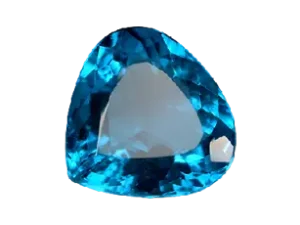
- Bangkok / Thai Sapphires: Bangkok is less an origin than the world’s treatment and trading hub, so a stone described as “Bangkok” is telling you about its processing rather than its geology. As standard industry practice, Bangkok goods are heat-treated and fissure-filled with glass to bring out the colour of the underlying stone, and the material tends toward a darker, inkier blue. Disclosed and correctly priced, this is the sensible entry point into Neelam — the reason a ring of the prescribed Ratti weight is achievable at a few thousand rupees rather than a few lakh, and why most astrologers will approve one. What you should refuse is a Bangkok stone described as unheated, or Bangkok material priced as though it were untreated Ceylon. Because the filling is chemically reactive, keep these stones away from ultrasonic cleaners and household acids, and warn your jeweller before any resizing.
Step 8: Choose a Trusted and Reputable Seller
Your final step is the one that decides the rest: who you buy from. With a stone whose price swings by a factor of a hundred on treatment alone, the seller’s disclosure is doing more work than your own eye ever will. Judge them on this:
- Expertise and Reviews: Look for established sellers with positive customer feedback and deep gemological knowledge.
- Transparent Policies: Ensure they have clear return, refund, and buy-back policies.
- Full Disclosure: They must provide complete information, including the gemstone certificate, for every product.
Why Trust Ratna Gems™ for Your Blue Sapphire?
At Ratna Gems™, we are dedicated to providing a transparent and secure gemstone buying experience. We are your trusted partner because we offer:
- Certified Original Gemstones: Every Neelam is certified by a government-recognized lab and comes with a Lifetime Authenticity Guarantee.
- Transparent and Honest Pricing: We offer competitive prices for natural blue sapphire gemstones with no hidden charges.
- Unmatched Customer Support: Our experts are here to guide you, and our 7-day return policy ensures your complete satisfaction.
Frequently Asked Questions
What are the astrological benefits of a Neelam stone?
In Vedic astrology Neelam is the gemstone of Saturn (Shani), and is traditionally worn on an astrologer’s advice, most often during Sade Sati or a Shani dasha. Practitioners associate it with discipline, focus and steadiness under pressure rather than with sudden fortune. These are traditional beliefs rather than verified outcomes, and Ratna Gems presents them as such.
How can I identify an original Neelam stone?
A laboratory report is the only reliable answer, because everything that matters — natural or synthetic, heated or unheated, filled or not — is decided under magnification and by spectroscopy rather than by eye. What you can check yourself is inclusions: natural sapphire almost always carries some under a loupe, and a stone showing no natural inclusions at all is worth questioning. One widely repeated test should be set aside: pleochroism does not distinguish natural from synthetic, because lab-grown corundum is pleochroic too. A colour shift between viewing angles tells you the stone is corundum, not that it grew in the ground.
Is Blue Sapphire a good choice for daily wear jewelry?
Yes. With a hardness of 9 on the Mohs scale, it is an exceptionally durable gemstone, second only to diamond. This makes it a perfect choice for rings and other jewelry intended for daily wear.
What is the price of an original Neelam stone in India?
Neelam prices span a very wide range because “blue sapphire” covers several different products. Heated and glass-filled Bangkok material starts around ₹700 per carat. Natural Ceylon sapphire runs from roughly ₹4,000 per carat for commercial colour up to ₹20,000 and beyond for fine unheated stones. Kashmir sapphires trade at auction and start above ₹1,00,000 per carat. The single most useful question to ask is not “what does Neelam cost” but “what has been done to this particular stone” — treatment moves the price far more than weight does.
How is the Blue Sapphire trial period done?
The customary practice is to wrap the loose, unmounted stone in a blue or black cloth and keep it under the pillow, or tied to the right upper arm, for three to five nights before it is set. Settled sleep and a calm frame of mind are read as the stone suiting the chart; persistent unease is read as a reason to pause and return to your astrologer. Do the trial on a loose stone and buy from a seller with a return window, so that pausing costs you nothing. This is a tradition rather than a diagnostic test, and any persistent headache, insomnia or anxiety is a matter for a doctor rather than a gemstone.